
Genetics that inform medications
What is the Scylex test?
Pharmacogenetic testing studies how genes affect a person’s response to drugs. It combines pharmacology and genomics so a clinician can consider medications and doses in light of that person’s genetic makeup.
The test looks for variants in pathways that break down or respond to medications. A result can flag a medicine that may be cleared too slowly, too quickly, or with a higher chance of side effects. It does not diagnose disease, and it does not choose the prescription by itself.
Learn more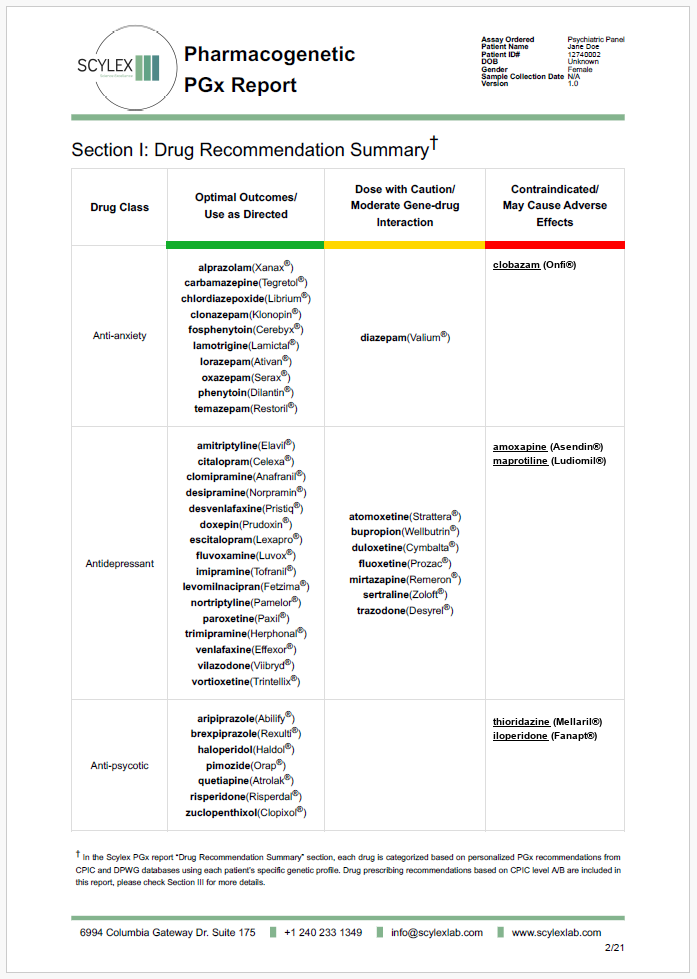
Real-time PCR
Targeted genotyping for known drug-response variants.
Next-generation sequencing
Broader reads when a study needs more of the genome.
Microarrays
Parallel measurement across many markers.
Whole-genome sequencing
A base-by-base view for discovery work.
A report organized for the prescribing visit
The psychiatric report sorts medications into three groups, using the patient’s genotype. Weight, skin, fitness, and nutrition panels use the same style of report for those traits. Smoking status and other clinical notes can also change how a medicine is metabolized, and those belong in the conversation with the prescriber.
- Use as directed. Optimal outcomes
- Moderate interaction. Dose with caution
- Adverse-effect risk. Contraindicated
Results do not provide a diagnosis, list medication allergies, or name which drug will work best. Prescribing stays with the clinician.
ProductsThe psychiatric panel summarizes anti-anxiety, antidepressant, antipsychotic, and related medicines in three color bands.

Research & innovation
Bringing us closer to care that fits the person
Incorporating AI-based neural networking to advance the application and impact of pharmacogenetics.
See the researchThe Scylex test process
Five steps, from the order to the conversation about the report.
A prescribing clinician requests the test. Primary care, psychiatry, nursing, and other registered prescribers can start the order.
Services
All services ›
Pharmacogenetic Testing
Genotyping that helps clinicians see how a person may break down or respond to certain medications.
Pharmacogenetic Research
Studies that help pharmaceutical teams evaluate metabolic pathways and medication effectiveness.

Liquid Biopsy
Sampling and analysis of blood and other fluids for noninvasive diagnostic and monitoring work.

Optimization of Novel Antibodies
Engineering support for newly identified antibodies aimed at new targets or stronger therapies.